Slow or Clogged Drain? What Actually Works (and What Ruins Your Pipes)
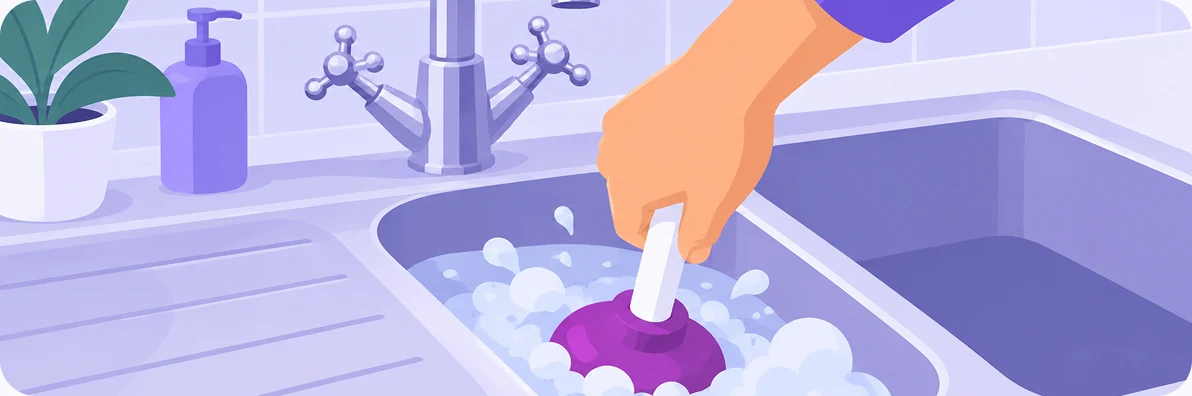
A slow or clogged drain is almost always hair, soap scum, or grease buildup in the first few feet of pipe. A plunger used correctly, or a $5 drain snake, clears most clogs in under 15 minutes. Skip the chemical drain cleaner, it can damage older pipes and won't touch anything further down the line.
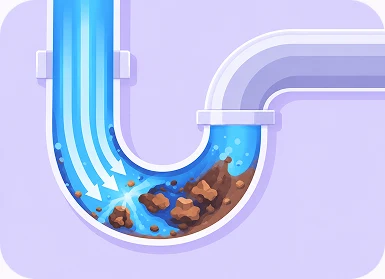
Diagnose What's actually clogging your drain
Bathroom sinks and tubs clog mostly from hair and soap scum. Kitchen sinks clog from grease and food particles that solidify inside the pipe. Either way, the buildup usually sits in the first few feet of pipe, right around the trap, which is exactly why a plunger or a short drain snake handles most clogs without needing to call anyone.

Unclog with plunger How to plunge a drain the right way
Most people don't use a plunger the way it's designed to work. Fill the sink or tub with a few inches of water, cover any overflow hole with a damp cloth for real suction, then place the plunger fully over the drain and plunge steadily for 20 to 30 seconds. Lift and check whether the water drains, repeat once or twice if it doesn't.
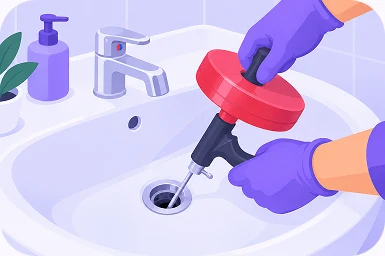
Unclog with snake How to use a drain snake on a clog a plunger can't clear
A basic hand snake costs about $5 and handles hair clogs a plunger can't reach. Insert it a few inches at a time until you feel resistance, tighten the screw on the handle, then rotate to break through the clog. Pull it out slowly, wiping off debris as you go, then flush the drain with hot water for about a minute.
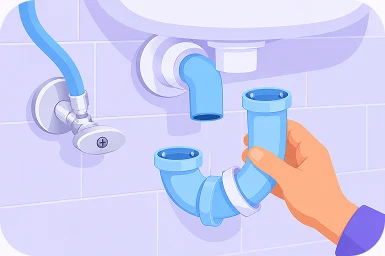
Unclog with P-trap Drain clogs again right after you clear it? Check the P-trap
The P-trap is the curved pipe under the sink, and if a clog keeps coming back, it's often sitting there. Place a bucket underneath to catch water, loosen the slip nuts on either end by hand or with pliers, remove the trap and clear out whatever's inside, then reinstall and hand-tighten the connections before running water to check for leaks.
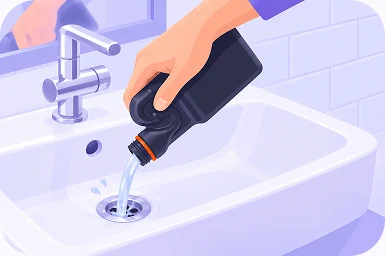
No to chemicals Why chemical drain cleaners do more harm than good
Chemical drain cleaners can corrode older metal pipes and don't reliably reach a clog further down the line. They also make it harder and less safe for a plumber to clear the drain later, since the leftover chemical can react unpredictably. A plunger or a snake handles the same clog without the risk.
How to keep drains from clogging in the first place
A monthly flush of hot water and baking soda helps prevent buildup before it becomes a clog. A cheap mesh drain guard catches hair before it goes down at all, and it's worth never pouring grease down a kitchen sink, even small amounts add up over time.
Describe where the slow drain is and how long it's been happening, and FinderlyFix will walk you through the right tool for the clog and tell you if it's a sign of something bigger.
Not sure what you're looking at? Snap a photo and FinderlyFix will tell you what's wrong, what it should cost, and what to do next.
Try FinderlyFix