Dishwasher Not Draining? Most Fixes Take Under 15 Minutes
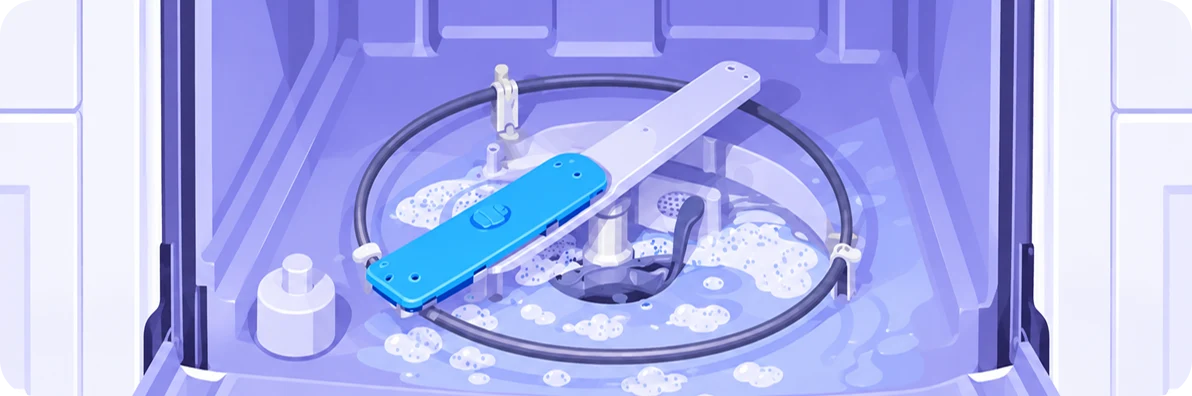
A dishwasher that won't drain is almost always a clogged filter, a kinked or blocked drain hose, or, if it drains through a garbage disposal, a plastic knockout plug that never got removed during installation. Check them in that order. Most fixes take under 15 minutes and need no tools.

Diagnose How to clean the dishwasher filter
Most standing water traces back here. Remove the bottom dish rack to find the filter assembly at the base of the tub, twist and lift it out (check your manual if it doesn't budge, some lock in place), and rinse it under warm water. If there's a lot of buildup, soak it in warm water with a splash of vinegar for ten minutes before rinsing again.
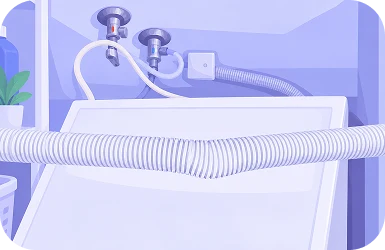
Diagnose How to check the drain hose for a kink
Find where the dishwasher's drain hose connects, usually to the garbage disposal or a dedicated drain line, and look for a kink or a sharp bend. In a cramped cabinet, it's easy for the hose to get pinched when the dishwasher's pushed into place. If it looks dirty or smells off, disconnect it carefully and flush it with water.
If the hose runs into a garbage disposal that was just installed, check the knockout plug. New disposals come with a plastic plug sealing the dishwasher inlet, and until it's punched out the dishwasher has nowhere to drain. Turn off power to the disposal first, unplug it or switch off its breaker. Then disconnect the hose, put a screwdriver against the plug inside the inlet, tap it through with a hammer, and reach into the disposal to pull the loose plug out before reconnecting the hose.
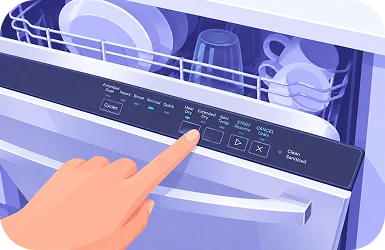
Test Run the dishwasher
Once you've checked the filter, hose, and knockout plug, reassemble everything and run a short rinse cycle.
How to prevent dishwasher clogs
Scrape large food particles off plates before loading, dishwashers handle residue, not full scraps. Clean the filter every few weeks, and run your garbage disposal briefly before starting a dishwasher cycle if the two share a drain line.
Describe what you're seeing, standing water after every cycle, a recent install, a strange smell, and FinderlyFix will rank the likely causes and tell you when it's time to stop taking the dishwasher apart yourself.
Not sure what you're looking at? Snap a photo and FinderlyFix will tell you what's wrong, what it should cost, and what to do next.
Try FinderlyFix